
Responsables de l'équipe / Team leaders
Sylvain Payraudeau & Marie-Claire Pierret
Composition de l'équipe / Team members
Chercheur.euses et enseignant.es-chercheur.euses / Researchers
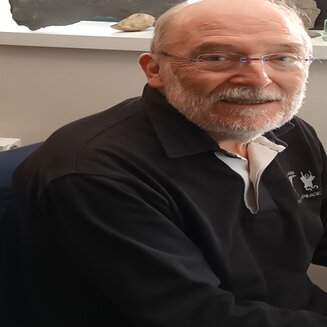
Bertrand Fritz
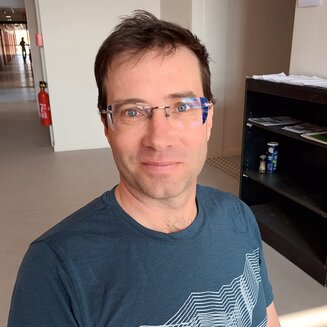
Gwenaël Imfeld
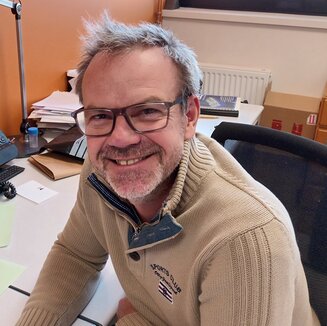
Damien Lemarchand
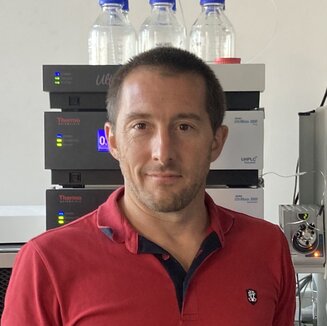
Christophe Marcic
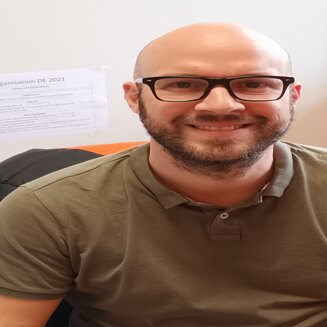
Jérémy Masbou

Sylvain Payraudeau
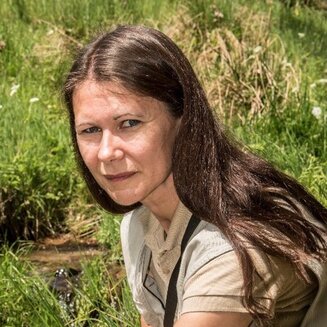
Marie-Claire Pierret

Sophie Rihs
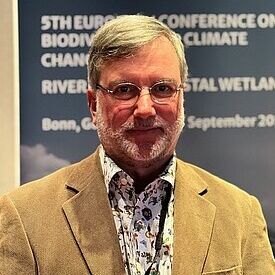
Matthias Wantzen

Tiphaine Weber

Felix Kögler
Ingénieur.es, technicien.nes et chargé.es de projet / Lab engineers, technicians and project leaders
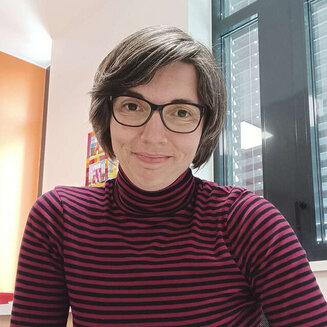
Amélie Aubert
René Boutin

Colin Fourtet
Mathieu Granet
Benoit Guyot
Véronique Marchant

Céline Cordier
Eric Pelt
Doctorants / PhD students

Aline Feder
Jakob Popp
Adrien Saphy

Anna Wallentin
Marion Texier

Gabrielle Chédin

Silvia Cardascia

Thomas Wendt

Clement Heyser

Qiao Zhiyuan

Dashgin Abakarov

Erik Butter
Post-doctorants / Post-doctoral students

Xiao Liu
Jesica Murray

Yixin Cao
Noémie Ehstand

Harro Joseph Jongen
Master 2 - 2025

Arthur Doan

Céleste Dagallier

Destin Mouyabi

Merlin Leullier

Rady Jean Bart
Team Isotopic and Experimental Biogeochemistry
Goal and motivation
BISE aims to understand and trace reactive processes in the Earth's Critical Zone (CZ)* under gradual climatic and anthropogenic forcings. The CZ corresponds to the thin layer of the Earth, from the top of the canopy to the base of deep aquifers, which is most profoundly impacted by human activities and also provides nutrients to the biosphere, playing an essential role in maintaining life on the planet.
The scientific motivation of BISE is to contribute to the knowledge and understanding of the complex interactions between the physical, chemical, and biological processes that control the transfer of matter between continental ecosystems and their response to environmental and anthropogenic pressures. Beyond scientific knowledge, this project also addresses societal challenges, in collaboration with non-academic partners, in the fields of water and soil management in forest, agricultural, and urban catchments, with a focus on the biogeochemical cycles of nutrients and the transfer and transformation of pollutants.
*The Critical Zone refers to the outermost layer of the planet Earth, where chemical interactions occur between air, water, organisms, and rocks.
Methodological Foundations
The methodological foundations of BISE are based on a quantitative, transverse, and integrated approach using measurements of material fluxes from the laboratory scale to the watershed scale, and the development of geochemical tracers and numerical models.
BISE relies on four pillars:
- Monitoring the transformations, transfers, and cycles of matter, including pollutants, from the soil column scale to the catchments scale, to identify and quantify the biogeochemical processes controlling the functioning of the CZ in natural, forest, agricultural, and urban experimental catchments;
- Methodological development of elemental and molecular tracers of these interactions in the CZ by coupling mineralogical characterization tools (XRD on soils, sediments, and clays) and chemical tools (major elements: Ca, Mg, P, and N, and trace elements: Sr, B, Rb, Ra, REE), traditional and non-traditional stable isotope measurements, radiogenic isotopes, and compound-specific isotopic analysis (CSIA) of organic pollutants;
- Biogeochemical laboratory experiments involving simple interface systems (idealized solutions, pure minerals, mono-functional or mono-specific/mono-phase) or complex systems (incorporating natural complexity) such as the rhizosphere or mineralosphere;
- Conceptualization of the processes controlling the transfer of matter in water-mineral-soil-organism systems, followed by the development of hydrogeochemical modeling approaches to interpret and predict the hydrogeochemical dynamics and isotopic fingerprints of organic pollutants from the soil profile to surface and groundwater in experimental watersheds.
Research Axes
Based on the team's skills and strengths, BISE focuses on two scientific axes:
- Biotic and abiotic water-mineral interactions with a focus on weathering cycles, biogeochemical cycles, and soil fertility;
- Reactive transport of synthetic micropollutants within continental surfaces and interfaces.
Understanding the role and impact of different types of organic matter as a source, transport vector, and transformation agent will be a cross-cutting theme in the BISE team. The objective is to understand the role of organic matter in the reactive processes of the CZ addressed in the aforementioned research axes.
Study of Natural Sites
The team develops a set of studies based notably on the isotopic approach to determine:
- The chronology of the formation and evolution stages of weathering profiles (U-Th-Ra);
- Exchanges and transfers between soil and vegetation (Li, B, Ca, Sr, Cu, Zn, etc.);
- The transformation of micropollutants through compound-specific isotopic analysis (CSIA).
This allows, in particular, the identification of the mechanisms and kinetics of mineral weathering or micropollutant transformation at the water/soil/organism interface.
BISE relies on various experimental sites ranging from forest to urban contexts. The strong involvement of several BISE members in the research and coordination of the OZCAR OHGE forest observatory fosters collaborations with French and international researchers to develop joint interdisciplinary studies on the CZ, such as in the PEPR OneWater or FairCarbon.
Research on the export of pesticides and copper in the agricultural watersheds of Rouffach (68) and Souffel (67) or on urban biocides in the Adelshoffen district (Schiltigheim, 67) contributes to supporting and accompanying the transition to pesticide-free agrosystems and biocide-free cities.
Experimental Studies
Our approach consists of:
- Describing the mechanisms and formulating the kinetic laws of water-mineral/soil (sediment)-organism interactions;
- Developing tracers of these interactions and transformation processes;
- Designing laboratory and/or field experimental approaches, involving simple interface systems or systems close to natural complexity.
This approach allows, for example, understanding the relationship between reactive processes at the crystalline scale and dissolution rates at the macroscopic scale, or quantifying the degradation and tracking the transformation pathways of pesticide residues or antibiotics in the soil-river-aquifer continuum of agro-ecosystems.
BISE team portfolio BISE team disseminates knowledge through education to a wide audience, while contributing to science through authentic approaches and international collaborations.
HydroGeoLABS – educational platform on how aquifers work. HydroGeoLABS is an educational platform (coordinated by S. Payraudeau) dedicated to the preservation of groundwater in the face of increasing anthropogenic and climatic pressures. HydroGeoLABS encourages reflection on our practices in order to educate students about the challenges and expectations of socio-economic actors in terms of sustainable water management.
Critical zone and society. The scientific equipment, projects, and data from the Strengbach OHGE experimental platform were presented at an art exhibition at the Karlsruhe Museum (May 2020-January 2022), the result of two years of exchanges between scientists, artists, and architects. BISE researchers participated in most of the public events and numerous communication activities with local partners and artists, highlighting the essential role of the critical zone
Reactivity of the bio/silicate/water interface (Wild et al., 2021). First quantification of silicate bio-alteration, including microorganism-induced dissolution and identification of microbial actors. This method combines DNA analysis to determine fungal diversity and nanoscale topography of the altered mineral surface. It opens up new perspectives for improving elemental balances in natural environments and confirming biosignatures on the surface of materials, illustrating BISE's interdisciplinary approaches.
- Transformation of organohalogens in groundwater (Prieto et al., 2021). This study highlights the effect of environmental dynamics on the transformation of organohalogens in groundwater in order to improve bioremediation. The novelty lies in examining the influence of groundwater fluctuations on hydrochemistry, bacterial community composition, and the degradation and metabolic pathways of dichloromethane. Dual isotope analysis, involving compound-specific isotope analysis (CSIA) of carbon and chlorine, was used for the first time to track DCM transformation pathways in aquifers. This illustrates BISE's experimental and analytical capabilities for monitoring pollutants using multi-element CSIA.
- Water-rock interactions on fluvial sediments (Ercolani et al., 2019). This work is part of C. Ercolani's thesis, co-supervised by Unistra and Wollongong (Australia), and awarded the John Head Xian Excellence Award (2019), the result of a fruitful partnership with BISE. The use of non-traditional isotopes (e.g., 11B/10B) as indicators of water/rock interactions in the conflict zone (CZ) reveals that surface waters are not in equilibrium with surface particles in the soil profile. The balance between deep water/rock chemical interactions and more superficial plant/soil cycles is a determining factor in the geochemical footprint of surface waters.