Seismological characterisation of geothermal systems in SW Iceland: Krýsuvík & the road to the IDDP-3 at Hengill
South-west Iceland hosts the country's most recent volcanism as well as important geothermal resources. In this talk, I will present seismic studies to characterise two volcanic systems in the region, Krýsuvík and Hengill, with the goal of supporting decision making for geothermal utilisation.
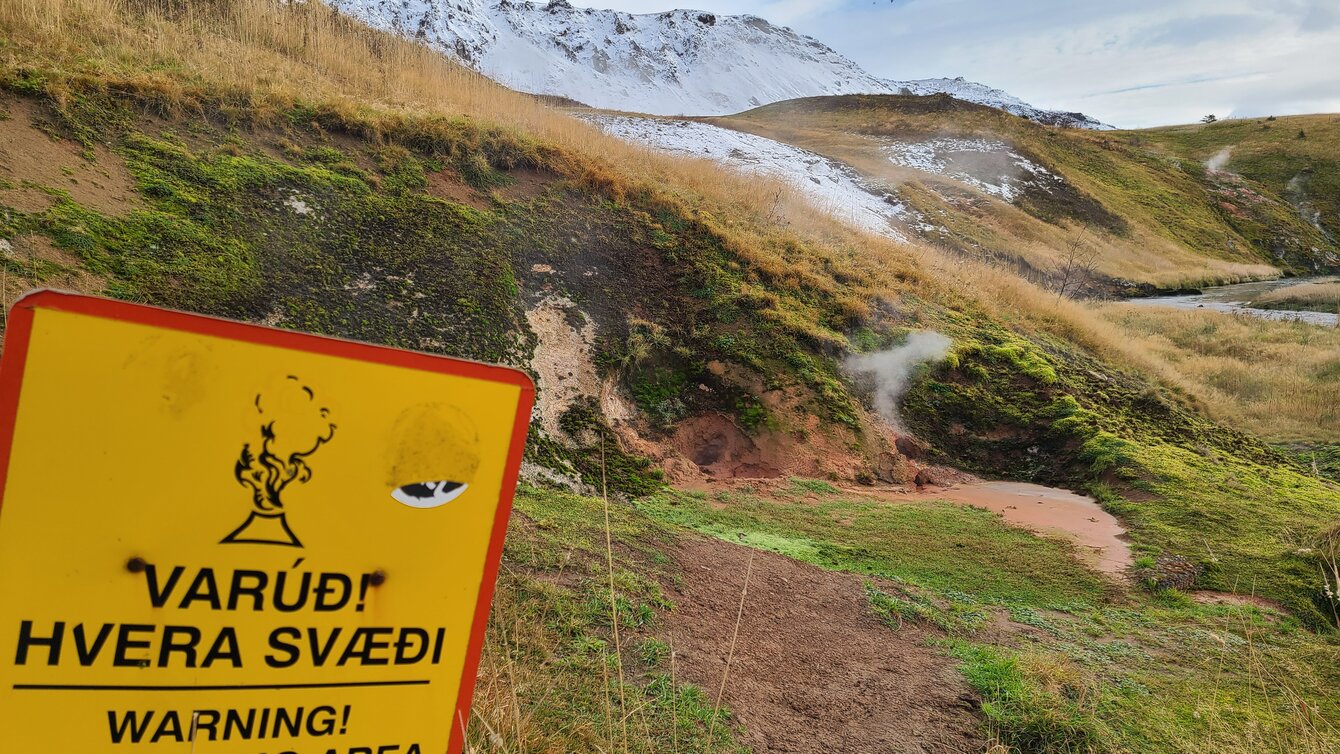
I will focus on Krýsuvík, a volcanic system to the southwest of the capital area. Krýsuvík sits just 10 km east of the 2021 eruption site Fagradalsfjall. The area has natural geothermal springs, and intense seismicity and inflation/deflation episodes are detected. It has been argued that a magma chamber may sit beneath the Sveifluháls volcanic ridge, and the potential for geothermal production has motivated research for decades. For this project, we have deployed temporary networks of seismic nodes, including dense lines of nodes across the volcanic ridge and recorded DAS data on a telecommunication cable along the ridge. I will present a catalogue of microseismicity, the application of 2D seismic reflection to local earthquakes, and the 2D Vp/Vs tomography across the volcanic ridge. Microseismicity is confined to shallow depths (< 5 km) beneath the ridge and its geometry points to geothermal activity. I will show first results from the reflection and tomography imaging and discuss how they constrain the structure of the system.
I will close by turning to Hengill volcano, to the east of Reykjavík, where two major geothermal power stations are in operation and where the origin of clustered seismicity remains unclear. Using large nodal arrays (DEEPEN/COSEISMIQ) and DAS data, I apply the in-situ double-difference method to estimate Vp/Vs ratios within the earthquake source region and Vp/Vs tomography to test the role of geothermal fluids. This work supports the IDDP-3, the third phase of the Iceland Deep Drilling Project, which aims to tap supercritical fluid at Hengill starting 2027